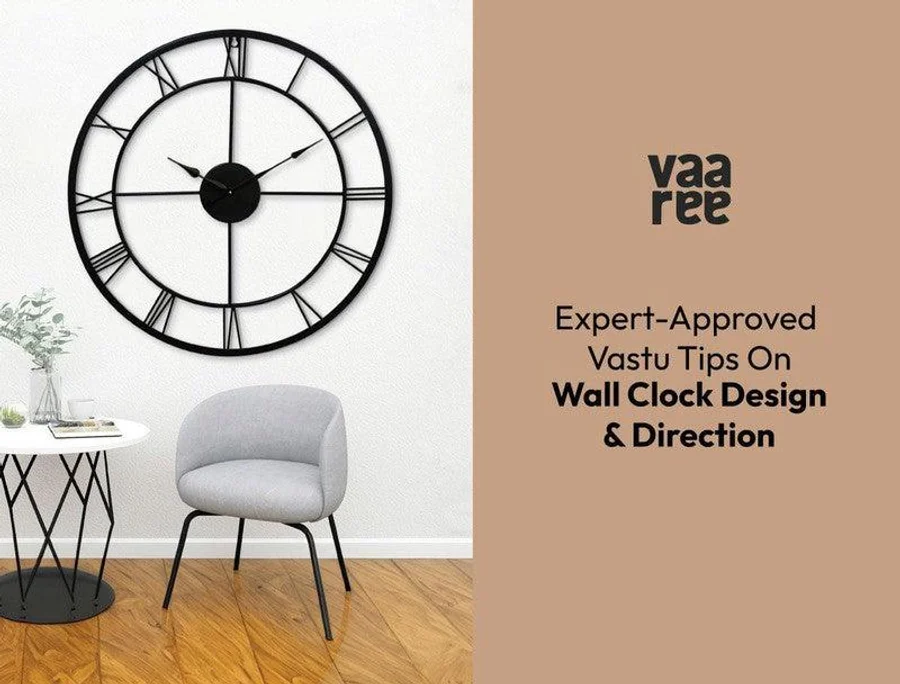
Despite the advent of mobile phones, a wall clock for home has retained its charm and value. It makes it easy to keep track of time while adding to the décor.
Clocks are available in many sizes, shapes, designs and colours to suit different interiors. In Vastu Shastra, traditional guidance on clock placement focuses on direction, condition and visual harmony. These suggestions are matters of belief, so choose a placement that also works safely and practically for your home.
Vastu Tips for Placing Wall Clocks
1. Direction
In traditional Vastu guidance, the North or East wall is often considered auspicious for a wall clock and is associated with positive energy.
2. South and West walls
Some Vastu traditions recommend avoiding the South and West walls for a clock. If these are your most practical options, prioritise a secure, easy-to-read placement.
3. Height
Hang the clock at a comfortable viewing height, ideally around eye level when seated. Avoid placing it so high or low that it is difficult to read.
4. Clockwise movement
A clock that moves clockwise is traditionally seen as a symbol of progress and forward movement. Choose a working clock with a clear, regular display.
5. No broken or stopped clocks
Avoid displaying broken or stopped clocks. Whether following Vastu or simply maintaining the room, repair, replace or store clocks that no longer work.
6. Bedroom placement
If you prefer to follow Vastu guidance, avoid placing a wall clock where it is directly visible from the bed. Where a bedroom clock is necessary, choose a position that feels unobtrusive and does not disrupt rest.
7. Keep it clean and well maintained
Keep the clock face and frame clean, and ensure it shows the correct time. Regular upkeep also helps it remain a considered part of the room.
8. Choose colours you enjoy
Choose a clock in colours that feel calm and cohesive with the room. Traditional guidance often favours uplifting, balanced colour choices over a look that feels heavy or distracting.
Role of Wall Clocks in Vastu
Vastu is an ancient Indian tradition concerned with design, layout, arrangement and spatial harmony. Beyond the structure of a home, many people also apply its principles to the placement of everyday objects. For those who follow these traditions, the direction and condition of a wall clock are considered part of creating a peaceful home environment.
Vastu Tips for Wall Clocks
1. Wall Clock Direction as per Vastu
- North and East are commonly recommended in Vastu traditions for hanging a wall clock. East is traditionally associated with Indra, while North is associated with Kuber.
- Traditional guidance advises against placing a clock on the South wall.
- Avoid positioning a clock directly facing a door where possible, and consider whether an outdoor placement, such as a balcony, is practical and protected from the elements.
- For a bedroom, keep the clock out of the direct line of sight from the bed if possible.
2. Wall Clock Shape as per Vastu
- Round clock faces are commonly preferred in Vastu for their simple, balanced form; oval shapes are also often considered suitable.
- If you are aiming for a Vastu-led look, choose a simple design rather than an irregular shape that makes the room feel visually cluttered.
3. Wall Clock Direction as per Vastu and Material
- Traditional Vastu guidance often associates metal clocks with the North, particularly in a living room.
- Wooden clocks are commonly associated with the East in Vastu traditions.
- Choose a clock that suits the room and check its dimensions, mounting requirements and care guidance on the product page before buying.
4. General Vastu Guidelines for Wall Clocks
- Do not keep a clock that has stopped working on display.
- Keep the clock set to the correct time; some traditions prefer it a few minutes ahead rather than behind.
- Keep the clock face and any glass cover clean.
- If you follow Vastu principles, avoid clock faces with imagery that feels sorrowful or violent to you.
- Pendulum clocks and clocks with chimes are regarded as auspicious in some Vastu traditions; choose them only if their sound and style suit your home.
Explore wall clock options
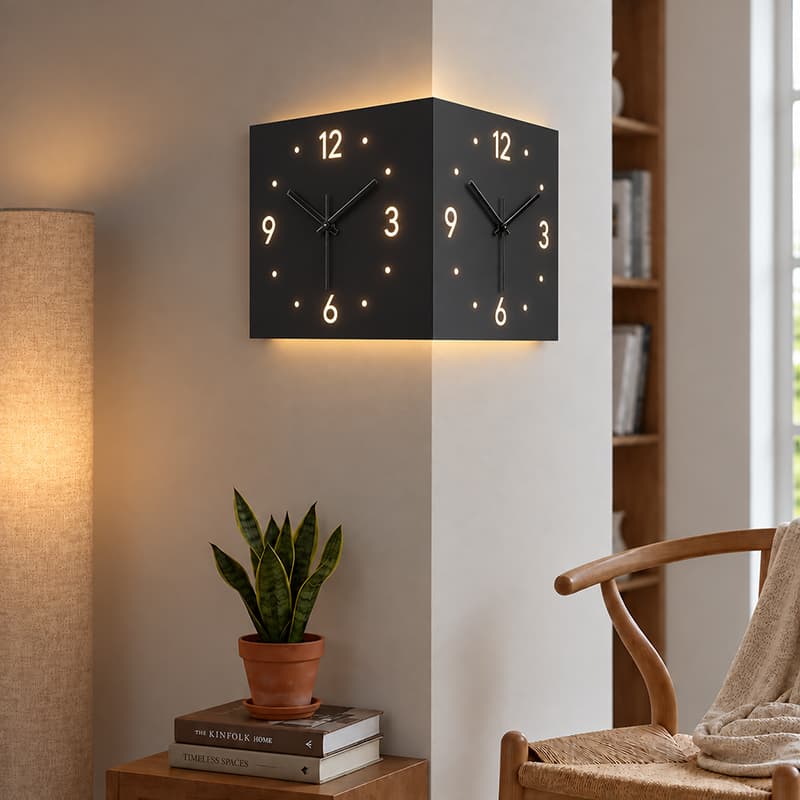
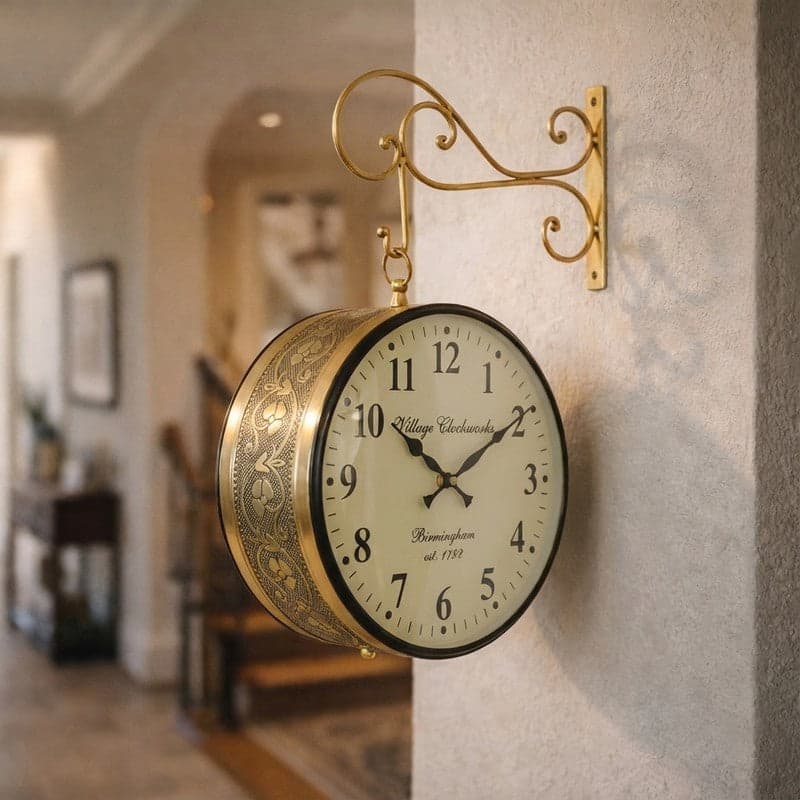
When choosing a clock, consider where it will be seen from, whether the dial is easy to read and how its design works with the rest of the room. Check the product page for dimensions, care and mounting details.

₹1,499
₹5,140
71%OFF

₹3,199
₹5,999
47%OFF

₹1,175
₹1,599
27%OFF
Frequently Asked Questions
1. Where is the best location to place a wall clock according to Vastu?
According to common Vastu guidance, North and East are preferred directions for a wall clock. These associations are traditional beliefs; choose a position that is also practical, secure and easy to view.
2. Does the size of the wall clock matter when considering Vastu guidelines?
Choose a size that is proportionate to the wall and readable from where you need it. Rather than relying on a fixed measurement, check the clock’s dimensions and plan the placement before buying.
3. Which direction should the wall clock face for positive energy flow?
North and East are the directions most often recommended in Vastu traditions. Some people also consider North-East suitable.
4. Can I place a wall clock in the bedroom according to Vastu?
A bedroom clock can be used if needed, but traditional guidance generally suggests placing it where it is not directly visible from the bed. Choose a calm, unobtrusive position that works for your routine.
5. What if I have a mirror near the wall clock?
Some Vastu traditions advise against a mirror reflecting the clock. If this matters to you, choose a wall where the clock is not directly visible in the mirror.
Browse related clock styles
Keep exploring