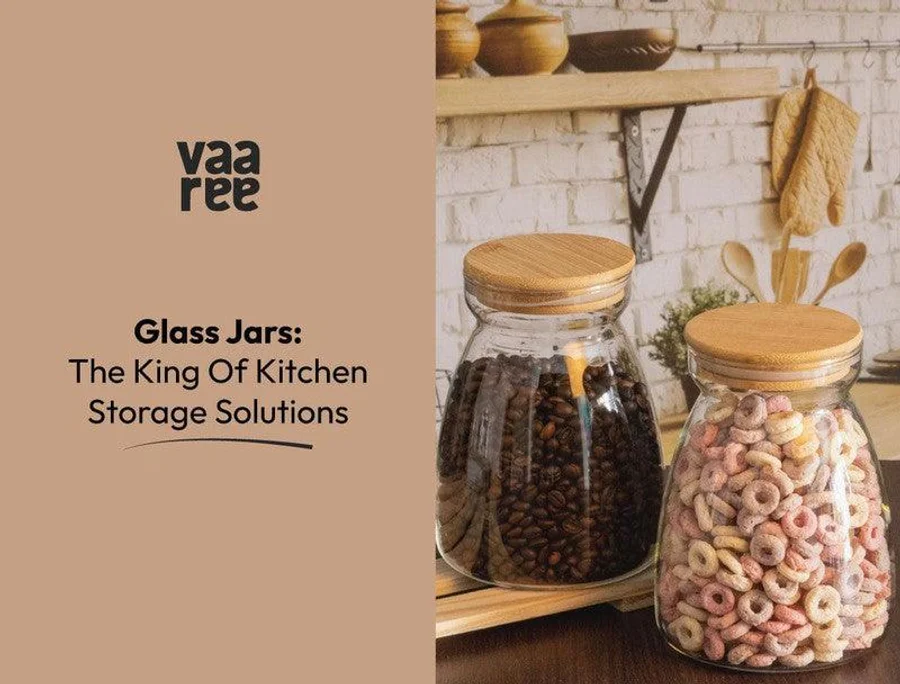
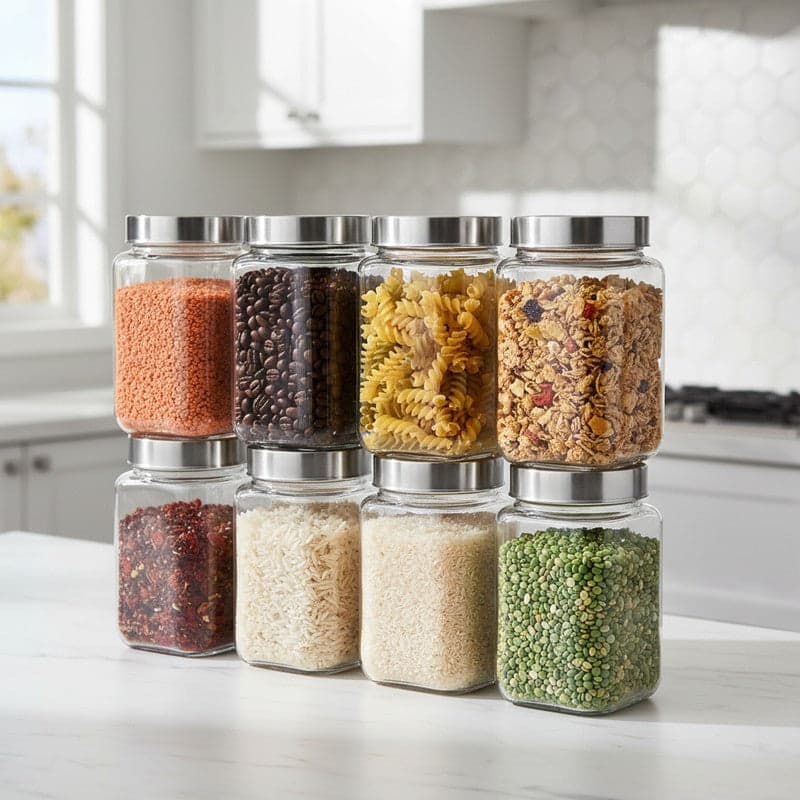
Kitchen storage can be hands-on and stylish at the same time. Glass jars offer a simple way to keep everyday ingredients visible while bringing a more considered look to shelves, counters and cupboards.
Let’s look at why this classic material remains popular for kitchen storage, along with the kinds of foods it can help organise.
Why Choose Glass?
- It is generally non-porous. Glass is commonly chosen for storing dry ingredients and prepared foods because its surface does not readily absorb odours. Choose jars intended for food storage, and check the product page for care and use guidance.
- It can be easy to keep clean. A clear jar makes spills and residue easier to spot. Follow the maker’s cleaning instructions for both the jar and lid, especially where wood, seals or other components are involved.
- It keeps contents visible. When you can see pulses, flour, tea or snacks at a glance, it is easier to find what you need and notice when supplies are running low.
- It can be a long-lasting storage option with careful handling. Glass can chip or break if dropped or exposed to abrupt temperature changes. Inspect jars and lids regularly, and replace damaged pieces.
- It is recyclable in many places. Glass recycling facilities and local rules vary, so check what your local programme accepts.
- It suits a range of ingredients. Small jars can help sort spices or condiments, while larger ones may suit pantry staples. Select capacity according to how quickly you use an ingredient and the space available.
- It has an enduring visual appeal. Matching or complementary jars can make open shelves and pantry cupboards feel more orderly without hiding useful everyday supplies.
What Can You Store in Glass Jars?
Glass jars can be useful for a variety of kitchen staples and prepared foods, provided the jar, lid and storage conditions suit the item.
- Homemade jams and pickles: Follow a tested recipe and its storage instructions. A decorative storage jar is not automatically suitable for preserving or shelf-stable storage.
- Dry grocery items: Pulses, flour, rice and similar pantry staples are easier to identify in clear jars. Use a dry, clean jar before filling it.
- Cereals and cookies: A jar with a close-fitting lid may be useful for dry snacks. How well food keeps depends on the specific lid, the food and the storage environment.
- Condiments: Small jars can help gather frequently used condiments in one place. Check the jar’s intended use and clean it between contents as needed.

For a pantry that is easy to maintain, group similar ingredients together: breakfast staples in one area, pulses in another, and tea, coffee or spices where they are easiest to reach. Label jars with the contents and date filled if that helps your household keep track.
Explore glass jar sizes for everyday storage
When comparing jars, start with the ingredient rather than the shelf alone. Smaller capacities can suit spices, toppings and small quantities; larger jars can suit ingredients bought more regularly. Check dimensions, lid details, care instructions and included pieces on each product page before deciding.
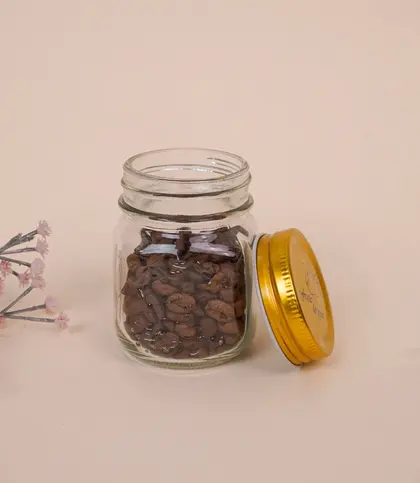
₹189
₹199
5%OFF
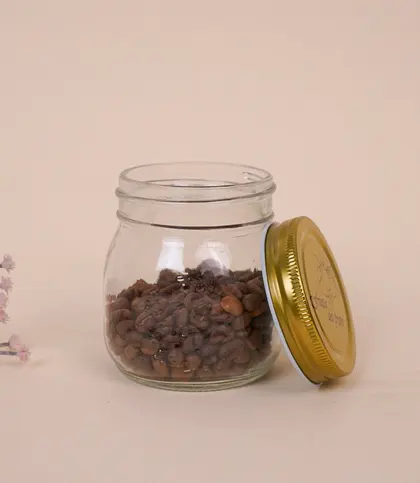
₹189
₹240
21%OFF

₹237
₹270
12%OFF
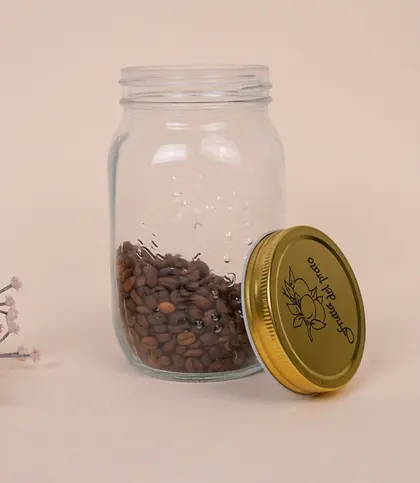
₹379
₹399
5%OFF
Frequently Asked Questions
1. How can glass jars be used as practical storage solutions in the kitchen?
Glass jars can help organise many everyday kitchen items, including:
- Pickles and jams, where the recipe and jar are suitable for the intended storage method
- Food grains and pulses
- Dry foods such as pasta and noodles
- Snacks such as cookies, biscuits and rusk
- Candies and chocolates
- Whole and ground spices
- Tea and coffee
Choose a jar size that you can comfortably lift, fill and use before the contents lose quality.
2. What are some creative ways to organise and store ingredients using glass jars?
Try arranging jars by category rather than by container size alone. For example, keep breakfast ingredients together, set aside a shelf for pulses and grains, and place frequently used spices within easy reach. Labels can make a mixed pantry quicker to navigate.
For chilled prepared foods such as chutneys, use a clean container that is suitable for refrigeration and follow the food’s storage guidance. If you prep fruit or vegetables ahead, use containers approved for the intended temperature and avoid storing them longer than recommended for the ingredient.
3. Are there any tips for choosing the right size and shape of glass jars for kitchen storage?
Yes. Measure the shelf, drawer or fridge area first, then choose capacities based on how much of an ingredient you normally keep. A smaller jar may be practical for spices and condiments, while a larger jar may suit frequently used staples.
If you plan to refrigerate or freeze food, use only jars explicitly approved for that purpose and follow the manufacturer’s instructions on temperature changes and filling. Stack jars only when the individual design and storage setup allow it safely.
Browse related storage collections
Keep exploring