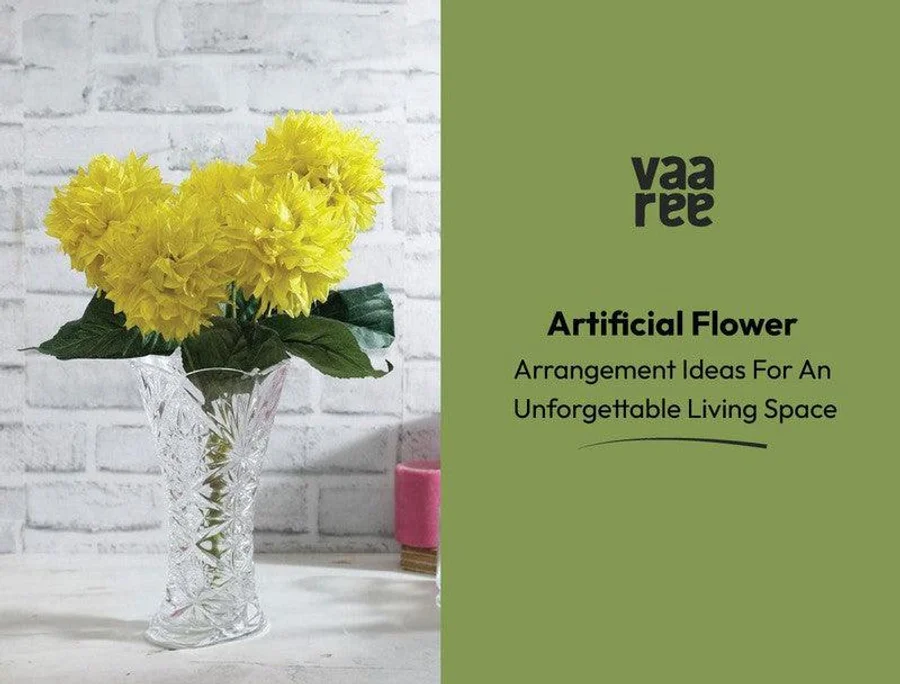
Faux flowers bring colour and shape to a room without the watering or replacement routine of fresh blooms. The way you group the stems matters as much as the flowers themselves: a single bloom, an airy handful and a full bouquet each create a different effect.
Use these ten artificial flower arrangements as inspiration, then choose stems and a vase that suit your space. The photographs are editorial styling references.
10 artificial flower arrangements for your living space
1. Hydrangea Bouquet Idea

Round hydrangea flower heads make a generous-looking bouquet. Gather faux hydrangeas in a rounded vase, keeping the heads at slightly different heights so the arrangement has shape. Choose closely related shades for a calm look or mix colours for a more eclectic display.
2. Mismatched Vase & Flowers

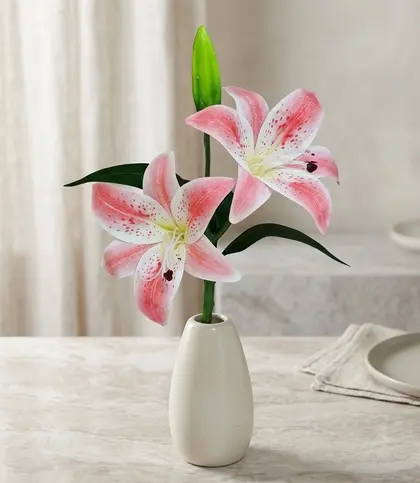
Pair long floral stems with a small-looking vase for a playful contrast. A lily-style stem can give this arrangement a clear focal point. The container still needs enough weight and depth to support the stems; shorten the display or choose a heavier base if it feels top-heavy. An unusual decorative vessel works only if it holds the stems securely.
3. Autumnal Flowers

Combine warm-toned flowers and foliage in a goblet-shaped vase for a dining-table arrangement with a vintage feel. Repeat one or two colours from the room instead of mixing every autumn shade. Keep the finished display low enough that people can see one another across the table.
Choose flowers for rounded, focal-point or autumnal arrangements
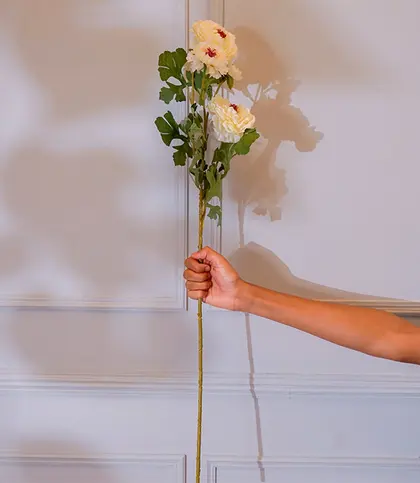
A hydrangea can suit a rounded bouquet, while a lily flower stick or autumn peony flower stick offers alternative flower forms. Check product details against your vase before choosing.

₹899
₹1,998
55%OFF
₹584
₹1,299
55%OFF
₹849
₹1,800
53%OFF
4. Single Stem Arrangement

One faux flower in a narrow-necked vase is enough for a bedside table, desk or small console. Choose a bloom whose shape you enjoy and let it stand on its own. Match the neck opening to the stem so it stays upright; a large bouquet is unnecessary for this idea.
5. Golden Glory

Gold-toned decorative foliage can become the focal point of a living-room arrangement. Keep the vase simple and give the stems space so the finish does not compete with several other shiny accessories. This works best as a restrained accent rather than part of an overcrowded display.
6. Monochrome Melange

Choose flowers and a vase in the same colour family for a coordinated display. A white-on-white arrangement feels restrained, while deeper matching tones create a stronger accent. Vary the flower shapes or surface textures to keep the arrangement interesting, and repeat the colour in one nearby accessory.
7. Spaced-Out Arrangement

For a modern setting, use a few stems with visible gaps between them. A glass vase makes the stem placement part of the composition. Try different heights and turn each bloom slightly rather than packing the opening tightly; leave enough empty space for the individual shapes to read clearly.
8. Beautiful Baby’s Breath

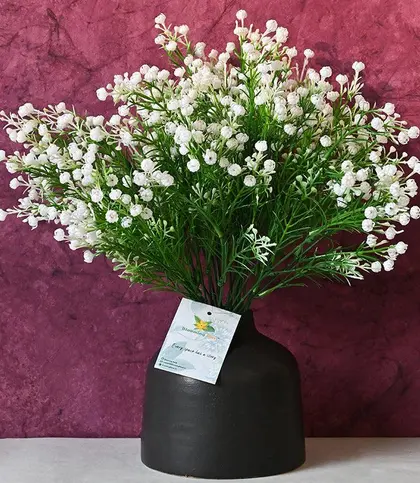
Baby’s breath can be the main feature instead of a bouquet filler. Place faux baby’s breath stems loosely in a vase and spread their branches gently if the product allows shaping. White gives a soft, simple effect; a coloured version changes the mood without requiring an elaborate mixed bouquet.
Compare simple white-flower arrangements
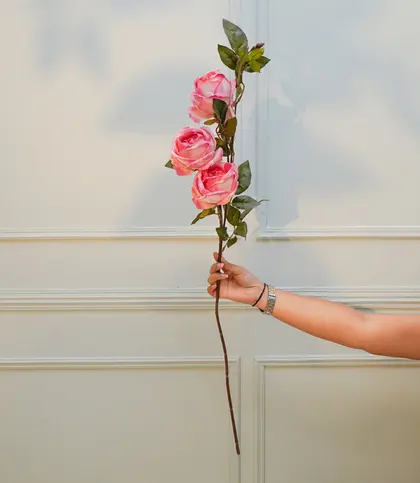
Compare a rose, a peony flower stick and baby’s breath for a single-flower, coordinated or airy display. Their different forms offer alternatives to a densely packed bouquet.

₹549
₹1,000
45%OFF
₹699
₹1,500
53%OFF
 FastDelivery
₹977
₹2,599
62%OFF
9. The Full Bouquet

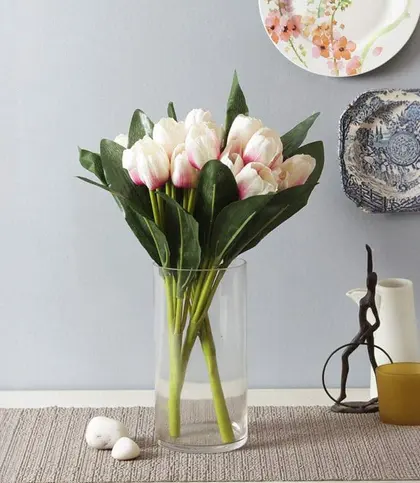
For a fuller display, choose a flower bunch or gather several stems of one flower type. Alternatively, mix a few flower shapes while repeating a small set of colours. Start with the larger blooms, add the smaller ones around them and turn the vase as you work so the arrangement looks considered from more than one side.
10. Blooms & Greens Arrangement

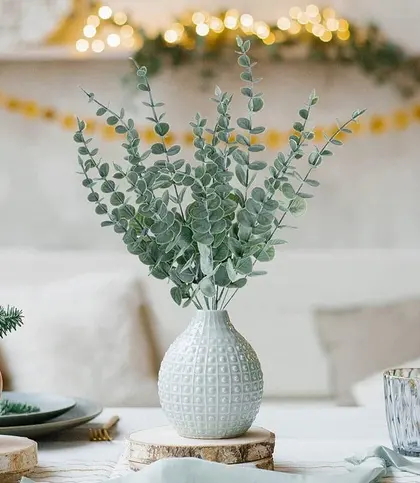
Recreate a garden-inspired look by letting flowers emerge from a base of foliage. Start with a few leafy stems, then add the blooms so they remain visible above and between the leaves. Eucalyptus-style foliage can soften a floral arrangement; adjust the stem count to the vase opening instead of crowding it.
Compare bouquet flowers and leafy stems
Compare the tulip and peonia bunches for the full-bouquet idea, and eucalyptus leaves for adding greenery around flowers.
From ₹299
₹800
53%OFF

₹899
₹2,250
60%OFF
₹649
₹1,623
60%OFF
Choosing and caring for your arrangement
Check stem length, vase opening and the space around the finished display before choosing. Keep delicate arrangements away from busy edges, and follow each product’s care instructions when shaping or cleaning it.
Frequently asked questions
What are the benefits of artificial flower arrangements?
They need no watering, can be rearranged and let you reuse a display. They still collect dust. Materials, coatings and fragrances vary, so artificial flowers should not automatically be described as non-toxic or allergy-free.
How do I choose artificial flowers for my living space?
Start with the size of the surface and vase, then choose one or two colours already present in the room. A single stem is an easy starting point; mix shapes and textures when you want a fuller arrangement.
Can artificial flowers look realistic?
Some can give a convincing impression, especially when the proportions, colours and placement look natural. Review the individual product photographs and details; realism varies between products.
How should I clean artificial flowers?
Dust gently with a soft brush or dry cloth. Use a damp cloth only when the product’s care guidance allows it, and avoid soaking stems or delicate finishes.
Explore artificial flowers
Compare flower types and colours for the arrangement you want to create.
Keep exploring